
How to rent a yacht in Singapore: step-by-step guide
Learn how to rent a yacht in Singapore with this step-by-step guide covering yacht types, booking tips, costs, and what to expect on charter day.
Most yacht owners know maintenance matters. Far fewer understand just how structured and layered the yacht maintenance processes behind a well-run vessel actually are. This guide goes beyond the basic boat maintenance checklist to cover the full picture: technical servicing cycles, planning frameworks, environmental challenges, and compliance requirements. Whether you own a private vessel or manage a charter fleet, what you do between voyages determines how long your yacht performs at its best — and how much it costs you when it doesn’t.
| Point | Details |
|---|---|
| Maintenance runs on two clocks | Track tasks by both engine hours and calendar time, since systems degrade by age even when idle. |
| Technical servicing has firm deadlines | Exhaust components and coolant systems follow strict replacement cycles regardless of visible condition. |
| Environmental exposure is a daily threat | Saltwater corrosion starts after every voyage; a fresh water rinse is your first line of defense. |
| Documentation protects your investment | Detailed logs support flag compliance, resale value, and smarter contractor negotiations. |
| Budget for the unexpected | Refit projects should carry a 10 to 20 percent contingency reserve to handle surprises. |
Yacht maintenance is not a single task. It is a set of overlapping systems, each running on its own schedule and requiring its own skill set. Getting a handle on the major categories is the starting point for any owner or operator who wants to stay ahead of problems rather than react to them.
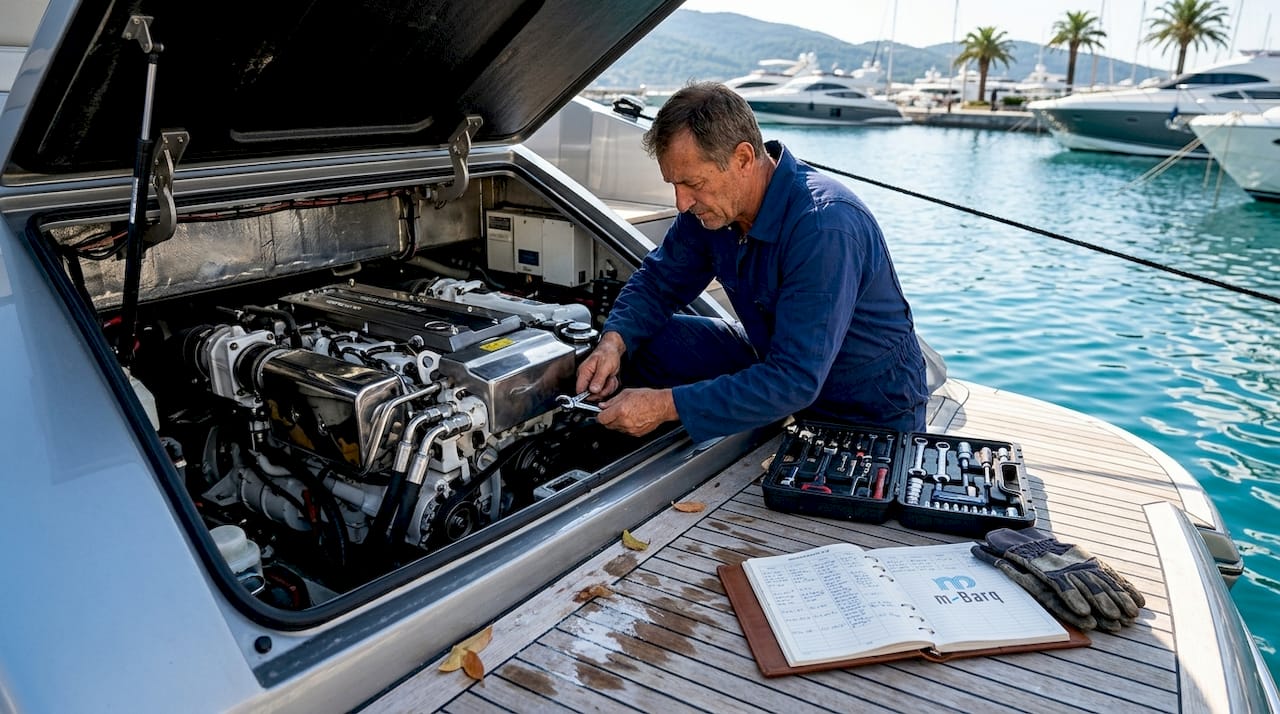
Engine and mechanical systems sit at the top of every priority list. Routine checks cover oil levels, coolant, belts, and raw water strainers. You should also monitor hydraulic fluid levels and inspect steering systems regularly. These are the checks your crew can perform daily and weekly, and they catch the early signs of trouble before a small leak becomes a serious repair.
Hull and deck maintenance focuses on corrosion prevention and structural integrity. Below the waterline, antifouling paint protects against marine growth and osmotic blistering. Above the waterline, gelcoat and paint protect fiberglass from UV degradation and salt exposure. Deck hardware, including cleats, winches, and hatches, should be inspected for wear, tightness, and proper sealing to prevent water intrusion.
Yacht cleaning processes are more than cosmetic. Regular washing removes salt deposits that accelerate surface corrosion, and interior cleaning prevents mold growth in humid climates like Singapore. Teak decks require specific cleaning products to avoid bleaching and fiber damage.
Pro Tip: Keep a laminated daily checklist at the helm station. Crew members are far more likely to follow a routine when the steps are visible and physical rather than stored in a manual no one reads.
Safety equipment checks are also part of your regulatory compliance requirements under most flag states. These are not optional. Missing a fire extinguisher inspection date or an expired flare set can ground your vessel during a port inspection, which is exactly the kind of disruption no charter operator can afford.
This is where most owners fall short. Routine cleaning and visual checks only go so far. Technical marine service procedures run on precise intervals tied to both engine hours and calendar time, and skipping them because everything “looks fine” is how expensive failures happen.
Here is a clear breakdown of the critical servicing intervals you need to know:
Pro Tip: Schedule oil analysis alongside every oil change. Oil analysis detects early signs of coolant intrusion, fuel dilution, and wear metals before they become visible failures. It costs almost nothing compared to what it can save.
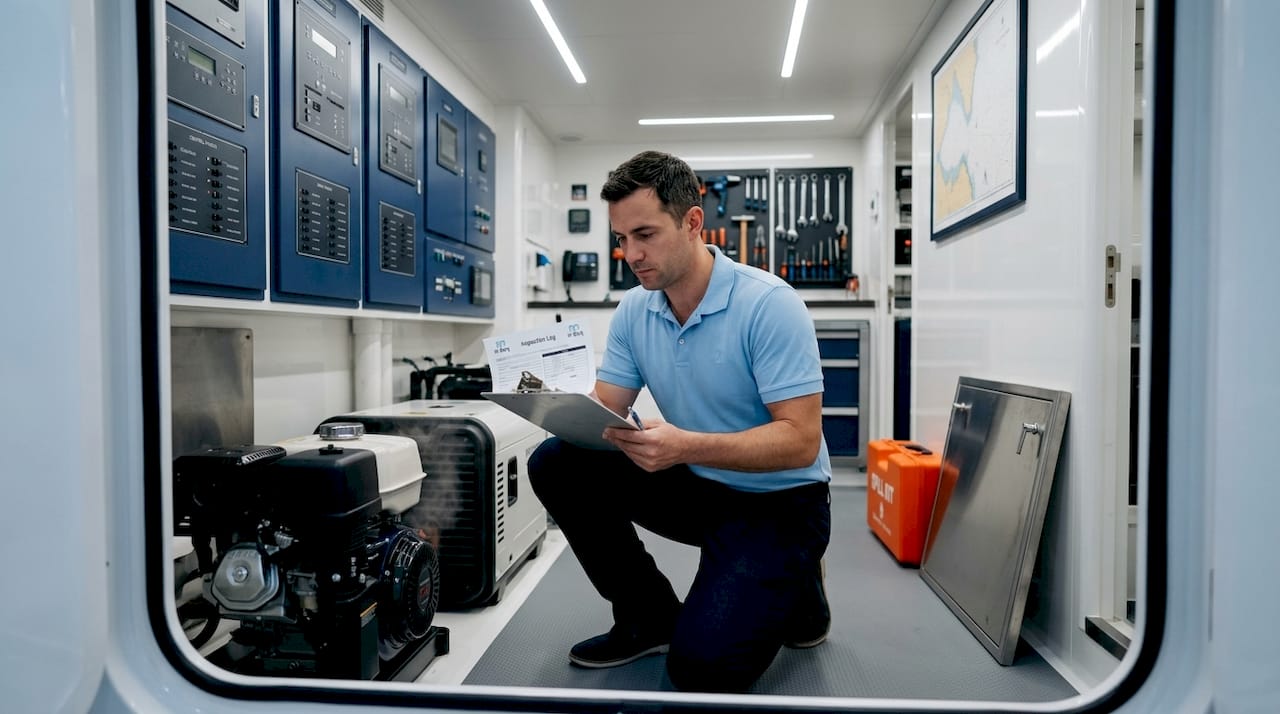
The generator deserves special attention in any tropical or remote operation. Marine generators are sensitive to fuel quality. Draining tank sumps weekly prevents microbial growth and injector clogging. Beyond the impeller, carrying a complete spare seawater pump for the generator is a smart precaution when operating away from marina services.
| Component | Service interval | Why it matters |
|---|---|---|
| Engine oil and filter | Every 100 to 250 hours | Prevents sludge buildup and engine wear |
| Raw water impeller | Annually or every 200 to 300 hours | Failure causes rapid engine overheat |
| Exhaust elbows and risers | Every five years | Internal corrosion causes seawater flooding |
| Coolant | Every two years | Acidic coolant destroys heat exchangers |
| Generator oil and filter | Every 100 to 150 hours | Maintains generator reliability and output |
Knowing what to do is only part of the equation. Knowing when, and having a system that catches everything before it slips through, is what separates well-run vessels from chronically expensive ones.
A maintenance matrix tracking tasks by both engine hours and calendar time is the gold standard tool here. Some components degrade from use. Others degrade from age, regardless of how many hours the engine has run. Your matrix needs to account for both. A simple spreadsheet works for a single vessel. Fleet operators benefit from dedicated vessel management software that generates alerts automatically.
Haul-out and refit planning is another area where preparation pays off. Budget overruns are common because owners underestimate scope. For major refit projects, a contingency reserve of 10 to 20 percent of total project cost is the accepted industry standard. Book your preferred yard and contractors early, especially in competitive markets. Good yards fill up fast.
Here is how a practical seasonal maintenance schedule breaks down across crew roles:
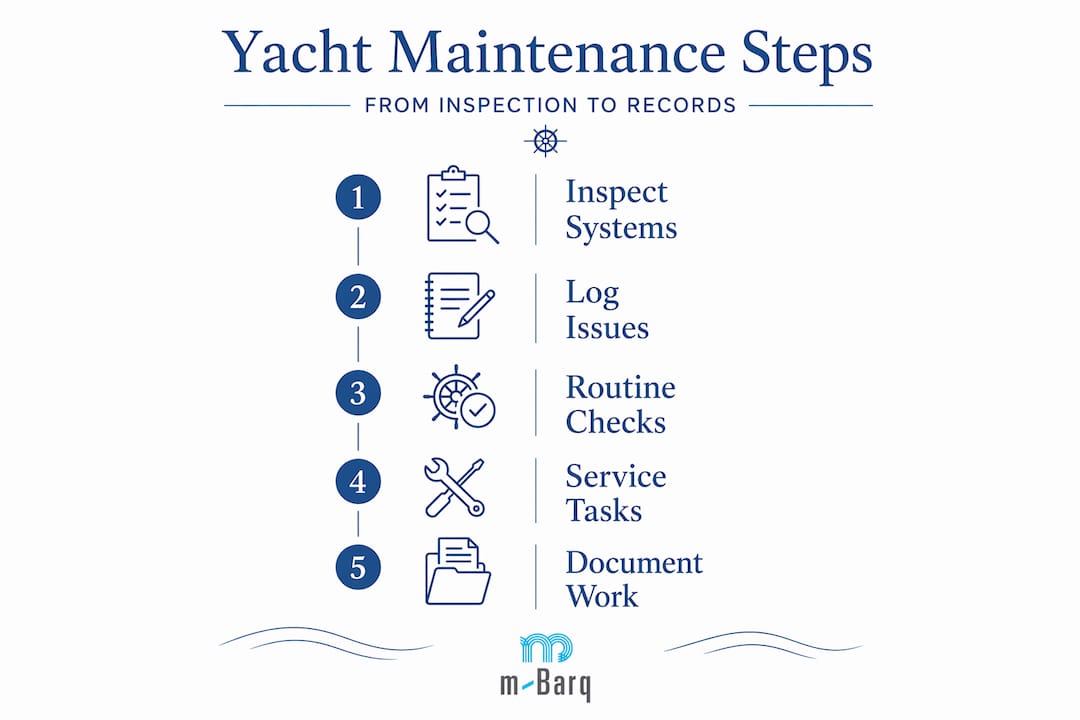
Documentation is what ties all of this together. Flag and class compliance requires written records, not just completed work. Every service, every parts replacement, and every inspection should be logged with dates, hours, part numbers, and the name of the person who performed the work. During resale or insurance renewal, this paperwork is what protects your asset’s value and your negotiating position.
Singapore’s climate creates specific maintenance pressures that differ from temperate sailing regions. Tropical heat, constant humidity, and saltwater exposure combine to accelerate corrosion and biological growth at a faster rate than owners from cooler climates expect.
Rinsing stainless steel with fresh water after every voyage is the single most effective corrosion prevention step you can take. Salt crystals are hygroscopic, meaning they pull moisture from the air long after the vessel is docked. Salt crystal moisture attraction accelerates pitting corrosion on railings, cleats, and fittings faster than the salt water itself. A thorough rinse breaks that cycle.
Pro Tip: Never use steel wool or carbon steel brushes on stainless steel surfaces. Ferrous particles embed in the metal and create rust spots that look like stainless steel failure but are actually contamination. Use dedicated stainless steel cleaning cloths and the right marine polish.
Beyond rinsing, operators in Singapore’s waters should factor in these specific strategies:
The cruising pattern of a charter vessel also matters. A yacht doing two to three events per week in Singapore’s coastal waters accumulates engine hours and saltwater exposure far faster than a private vessel used occasionally. Your maintenance schedule should reflect actual usage intensity, not just default calendar intervals.
The most expensive yacht repairs almost always start as small, ignored problems. A weeping fitting, a slightly spongy steering response, a faint burning smell from the engine room. These are signals. Owners and crew who dismiss them as minor pay for it later, often at the worst possible time.
Here are the mistakes that come up again and again:
The right team, the right records, and the right schedule are not overhead costs. They are what keeps your vessel earning and your guests happy.
I’ve seen enough yacht ownership situations to say this clearly: the owners who treat maintenance as a checklist to get through are the ones who end up with the biggest repair bills. The owners who treat it as a living system — one that needs tracking, questioning, and constant adjustment — are the ones whose vessels hold value and stay operational year after year.
What I’ve learned from watching how charter operators handle this is that the gap between good and great maintenance comes down to documentation and schedule discipline. Anyone can do the work. Far fewer actually record it properly. And when something does go wrong, the operators with clean logs solve it faster, fight insurance claims more effectively, and sell their vessels at better prices.
The other reality: no amount of DIY enthusiasm replaces a relationship with a qualified marine engineer who knows your specific vessel. In my experience, the cost of that relationship is always lower than the cost of a reactive major repair that a trained eye would have caught early.
Proactive maintenance is not pessimism. It is the most optimistic thing you can do for your vessel.
At M-barq, we know that a great day on the water starts long before guests step aboard. Well-maintained vessels are not just safer — they deliver the kind of experience that guests remember and corporate clients book again. When you explore yacht ownership and charter ROI with us, maintenance planning is built into the conversation from day one. We help you think through the full picture, from servicing schedules to seasonal event planning, so your vessel is always ready when it matters most.

Whether you are hosting a corporate outing to Lazarus Island or planning a private celebration, M-barq connects you with well-serviced yachts and handles every detail. Explore our full range of yachts available for hire and see what a genuinely prepared vessel feels like from the moment you arrive.
Engine oil and filter changes, impeller replacement, exhaust component renewal, and coolant servicing are the highest-priority technical tasks. These follow strict intervals based on engine hours and calendar time, and skipping them carries the highest risk of catastrophic failure.
Standard engine maintenance calls for oil and filter changes every 100 to 250 operating hours, depending on the manufacturer’s specifications. Charter vessels with high usage will reach this threshold significantly faster than private yachts.
Stainless steel corrodes when salt crystals left after voyages attract moisture from the air, a process that continues long after the vessel is docked. Rinsing with fresh water after every saltwater outing is the most effective preventive step and is commonly overlooked.
Industry practice recommends setting aside 10 to 20 percent of the total refit budget as a contingency reserve. Unforeseen issues discovered during work are common, and having that buffer prevents delays and cost overruns from derailing the project.
Generators require oil changes every 100 to 150 hours and are particularly sensitive to fuel quality. Weekly sump draining prevents microbial growth, and generators should run under load regularly when the vessel is idle to maintain internal lubrication and prevent corrosion.