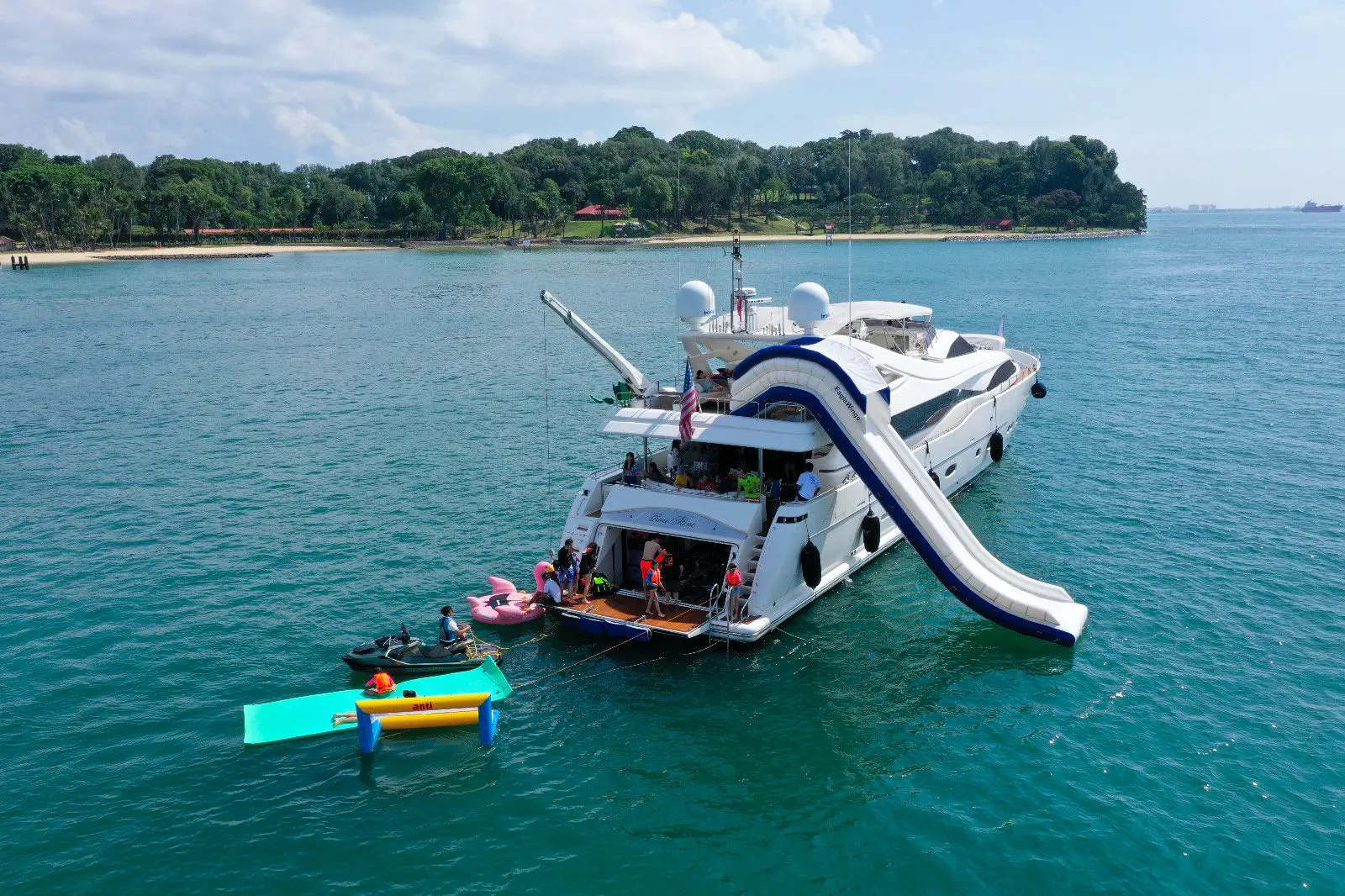

How to rent a yacht in Singapore: step-by-step guide
Learn how to rent a yacht in Singapore with this step-by-step guide covering yacht types, booking tips, costs, and what to expect on charter day.
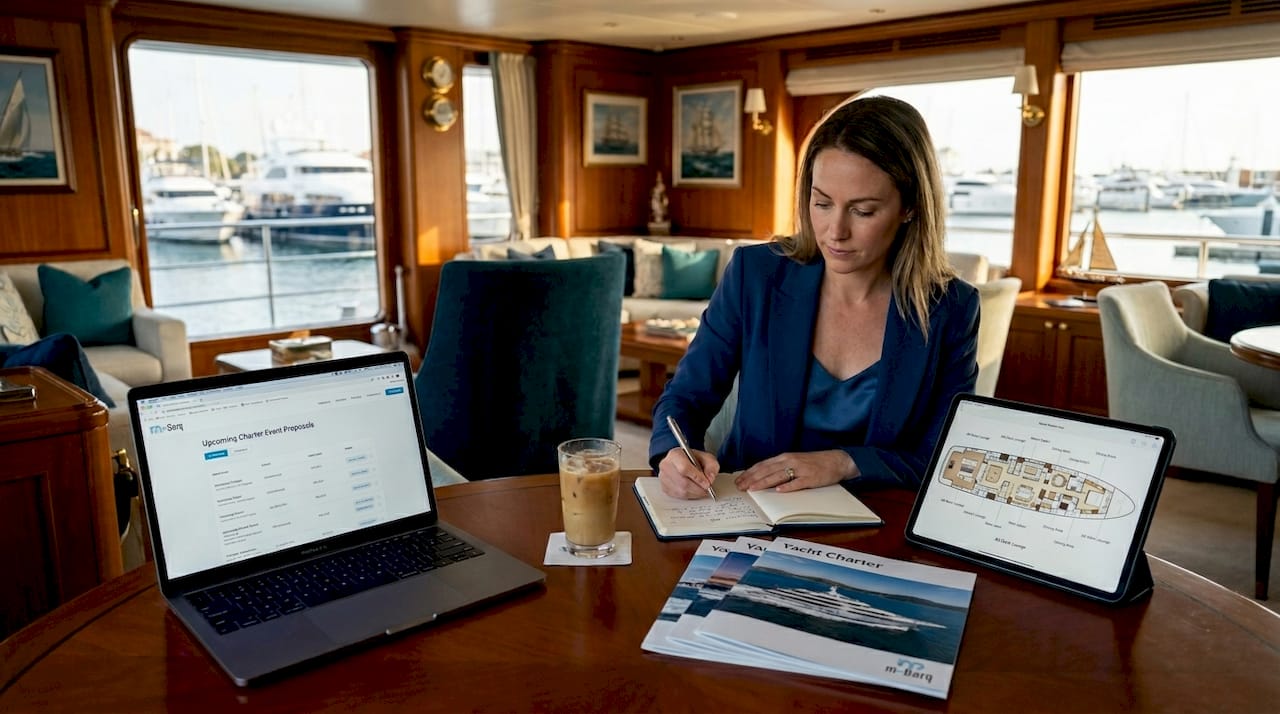
You assume every yacht has a capacity number printed clearly on a placard, like a conference room sign. It’s a reasonable assumption. But what is yacht capacity really? The answer is more layered than you’d expect, and if you’re planning a corporate event on the water in Singapore, getting this wrong can mean overbooking, legal exposure, or a very uncomfortable afternoon out at Lazarus Island. This guide breaks down exactly how capacity is defined, measured, and applied so you can plan confidently and keep your guests happy from departure to the last stand-up paddleboard session.
| Point | Details |
|---|---|
| Yacht capacity varies by vessel size | Small boats have fixed capacity limits while larger yachts rely on stability assessments to determine passenger numbers. |
| Certification differs by yacht length | Boats under 26 feet use capacity tags, while larger boats have certification plates without passenger limits. |
| Capacity affects event safety and compliance | Understanding capacity helps planners avoid overcrowding, legal issues, and ensures guest comfort. |
| Verify documentation before booking | Planners should confirm certification and capacity or stability reports with yacht operators for safe event planning. |
| Choose yacht size to match event needs | Matching yacht size and capacity to the type of corporate event and number of guests ensures smooth experiences. |
Yacht capacity refers to the maximum number of people a vessel can safely carry at one time. But here’s the part most planners miss: that number isn’t always posted on the boat, and when it is, it doesn’t always mean what you think it means.
For corporate yacht charters in Singapore, capacity drives almost every other planning decision. It shapes your guest list, your catering order, your activity spacing, and your compliance paperwork. Get it right, and the event flows. Get it wrong, and you’re either turning guests away at the dock or putting everyone at risk.
Here’s why yacht capacity matters more than people realize:
As yacht certification confirms, compliance with safety and design standards does not specify a fixed passenger capacity for vessels 26 feet or larger. That surprises a lot of planners who expect a simple number they can rely on.
Understanding regulations helps decode the capacity information you’ll encounter when working with yacht providers. The rules differ significantly based on vessel size, and knowing this protects you during the planning process.
Here’s how the regulatory framework breaks down:
This is why two yachts that look similar in size can have very different practical guest limits depending on how they were built and certified.
Pro Tip: When a yacht provider gives you a maximum capacity number for a large vessel, ask them to show you the stability documentation behind that figure. Any reputable operator will have it and will be glad to share it with you.
For context on how yacht certification and safety standards translate into real event planning decisions, it’s worth reviewing what documentation your operator holds before you sign anything.
Let’s get specific about the mechanics, because this is where explaining yacht capacities gets genuinely useful for your planning process.
Small yachts (under 26 feet) use a displacement-based calculation. The formula accounts for the vessel’s total weight capacity, subtracts the weight of the engine, fuel, and gear, and divides the remainder by an average passenger weight. This gives a hard number. Simple, clear, and easy to verify.
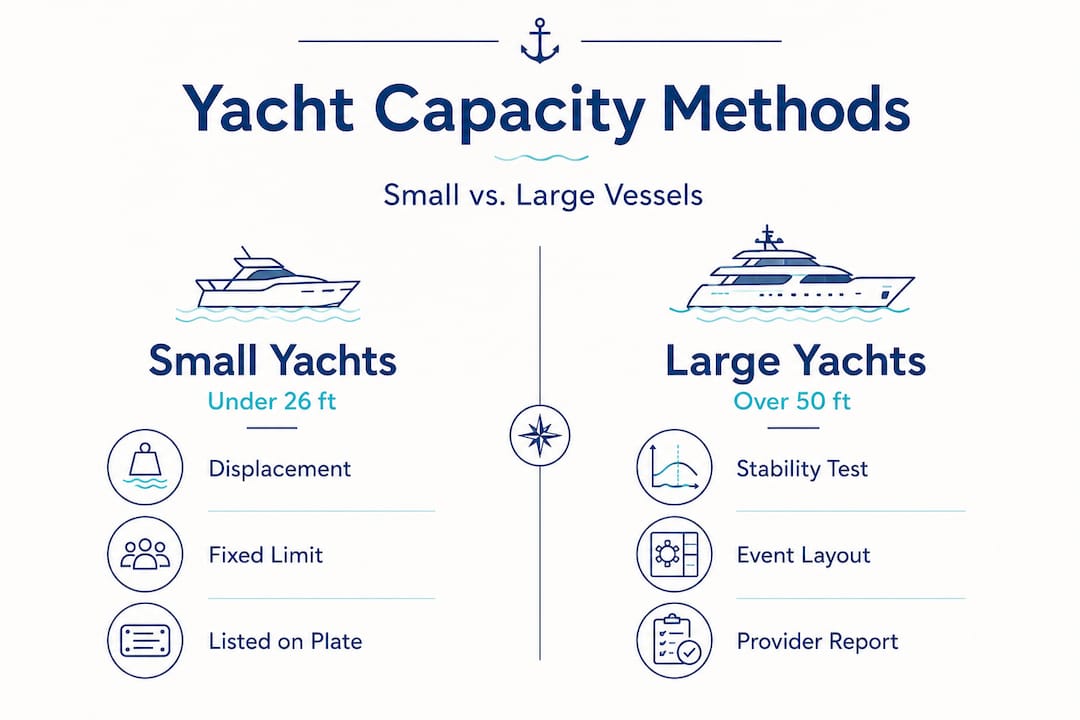
Large yachts (50 feet and above) work differently. Larger vessels determine capacity based on stability analysis rather than displacement, which actually allows them to accommodate more passengers than seating capacity alone would suggest. This means the formal seating count on a large yacht is not your ceiling. It’s often your floor.
Key factors that go into stability-based capacity analysis:
For corporate yacht charter planning at the medium-to-large end of the market, always request both the seating count and the stability-assessed maximum. They’re not the same number, and the difference matters.
With the concepts clear, here’s how to put this knowledge to practical use before your next event on the water.
Before you book:
When planning your guest experience:
On event day:
Pro Tip: Build a 10 percent buffer into your guest list planning. If a yacht comfortably holds 40 guests for your activity style, send invitations to 36. This gives you wiggle room without compromising safety or experience quality.
To choose the right yacht, it helps to see how common size classes match up against typical corporate event formats. This is your practical guide to yacht capacity guidelines in action.
| Yacht size | Typical capacity range | Best for | Activity space |
|---|---|---|---|
| Under 26 ft | 6 to 12 guests | Executive meetings, small team outings | Minimal; limited to on-deck only |
| 26 to 50 ft | 12 to 30 guests | Team-building, small celebrations | Moderate; water activities possible |
| 50 to 120 ft | 25 to 55 guests | Corporate parties, client events | Good; deck space for catering and activities |
A few things worth noting from this framework:
Browse the full range of yachts for rent in Singapore to find options matched to your guest count and event style.
Here’s a view you won’t hear from every charter broker. Chasing the maximum yacht occupancy number is the wrong goal for corporate events. We’ve seen it happen. A company books a yacht rated for 55 guests, invites 50, and then wonders why the energy feels flat and the team-building activities feel rushed.
The real question isn’t “how many people can fit?” It’s “what experience do you want those people to have?” A yacht at 65 percent capacity with room to breathe, a water slide that people can actually queue for, and enough deck space for a proper meal creates a completely different energy than a vessel at its limit.
In Singapore’s heat, space also means airflow. Guests crammed onto a sun deck with no room to shift into shade get uncomfortable fast, and uncomfortable guests don’t engage, connect, or remember the event fondly.
Our honest recommendation: use the yacht’s maximum capacity as a ceiling, not a target. Plan your guest experience first, then find the vessel that makes it possible. You’ll get better feedback, stronger team outcomes, and guests who actually talk about the day afterward.
Figuring out the right yacht for your group doesn’t have to feel like a research project. We handle the matching, the documentation, the coordination with the captain, and all the details in between so your team just shows up and has a great time.
Whether you’re planning a team-building day out to Lazarus Island with kayaking and a water slide, a client appreciation evening, or a full company celebration, we’ll find the right vessel and make the whole day run smoothly. Tell us your guest count, your vibe, and your date, and we’ll take it from there. Reach out to our team at m-barq.com and let’s get your event on the water.
For vessels 26 feet or longer, capacity is based on stability analysis rather than fixed displacement limits, which often allows more passengers than seating count alone reflects. The operator holds responsibility for applying this correctly.
There are no federal laws requiring capacity limits on vessels 26 feet and longer, so their plates confirm design and safety compliance without specifying a passenger ceiling. Operators manage actual limits using stability reports and design documentation.
Planners should review the yacht’s certification, request compliance and stability reports, confirm charter licensing for Singapore waters, and agree on a firm guest count with the operator before signing any contract.
On larger yachts, seating typically underestimates the true maximum because stability factors determine the real ceiling. Always request the manufacturer documentation or stability assessment for an accurate figure.
Yes. Failure to comply with capacity and certification regulations can result in fines, a terminated charter, and serious safety hazards for your guests. It’s not a risk worth taking.