
How to rent a yacht in Singapore: step-by-step guide
Learn how to rent a yacht in Singapore with this step-by-step guide covering yacht types, booking tips, costs, and what to expect on charter day.
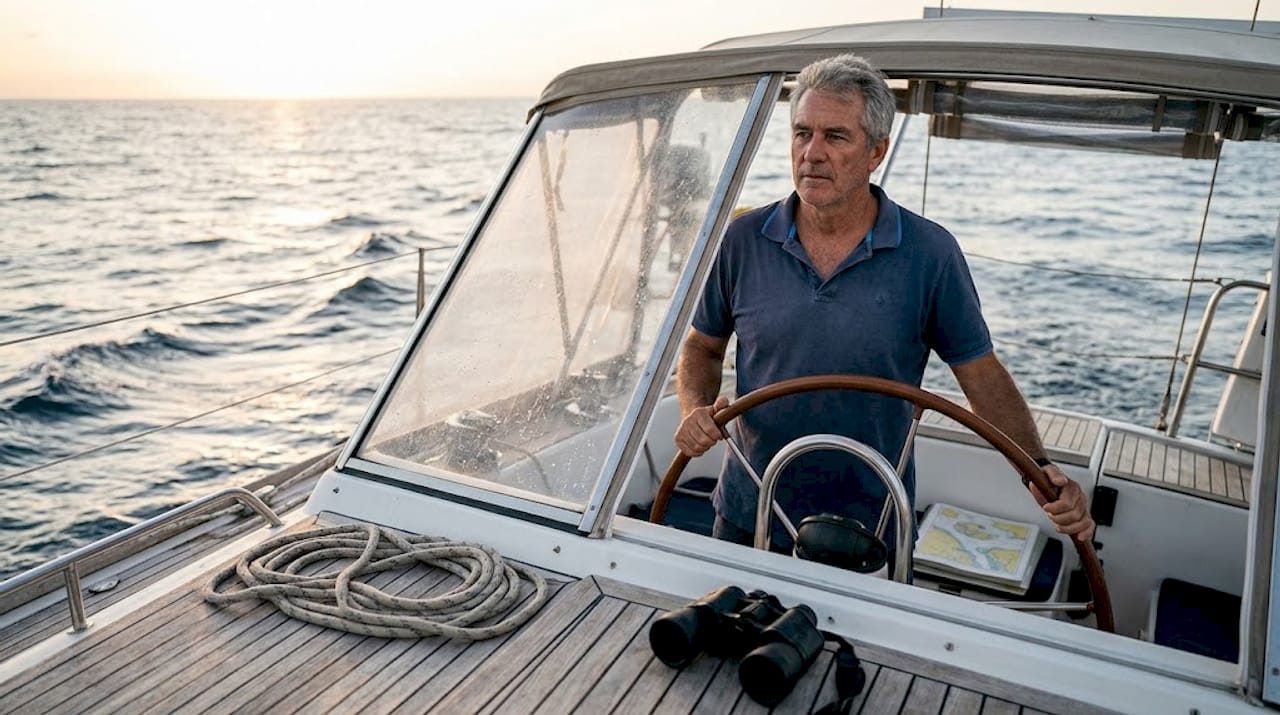
Not every luxury yacht is built for the open ocean. That surprises a lot of people, especially those planning a big adventure beyond Singapore’s coastal waters. A bluewater yacht is a sailing vessel designed for long-distance ocean passages and open-sea cruising, capable of handling rough conditions far from shore. These are purpose-built machines, not just floating hotel suites. If you’re thinking about a charter that goes beyond a sunset cruise around Sentosa, understanding what separates a bluewater yacht from the rest will shape every decision you make, from safety to comfort to the destinations you can actually reach.
| Point | Details |
|---|---|
| Ocean-ready design | Bluewater yachts are specially designed for extended offshore voyages with safety, redundancy, and comfort in mind. |
| Key differences matter | Understanding bluewater versus coastal yachts helps you choose the right vessel for your ideal luxury charter. |
| Look for proven models | Charter fleets often feature legendary bluewater yachts like Oyster, Hallberg-Rassy, and Boréal for their reliability. |
| Singapore group friendly | These yachts are an excellent choice for families or larger parties seeking unforgettable ocean experiences from Singapore. |
Let’s get clear on the term. A bluewater yacht is not just any big, beautiful boat. The word “bluewater” refers to open ocean, as opposed to the calmer, sheltered “green water” of coastal zones or the “brown water” of rivers and harbors. So a bluewater yacht is specifically engineered to handle what the open ocean throws at it: big swells, unpredictable weather, long stretches without a port in sight.
These yachts are built around three core principles: seaworthiness, self-sufficiency, and sustained comfort. Seaworthiness means the hull, rigging, and systems are rated for heavy weather. Self-sufficiency means the yacht carries enough fuel, water, food storage, and backup systems to operate independently for weeks. Sustained comfort means the interior is designed so that life on board stays livable even when conditions get rough.
Here’s what sets a bluewater yacht apart from other vessel types:
Pro Tip: Just because a yacht looks luxurious does not mean it’s bluewater-capable. Always ask the charter broker specifically about ocean ratings, hull material, and onboard redundancy systems before you commit to a booking. Our bluewater yacht charters come with full spec sheets for exactly this reason.
It’s also worth knowing that bluewater yachts come in different configurations. You’ll find both catamaran and sailing yachts in the bluewater category, each with their own stability profiles and comfort advantages. Catamarans, for example, offer more deck space and a shallower draft, while monohulls tend to handle heavy weather with a more predictable motion.
With the basics established, it’s essential to understand how bluewater yachts fundamentally differ from other popular options. This comparison matters a lot when you’re choosing a charter for a group trip, a family adventure, or a corporate event.
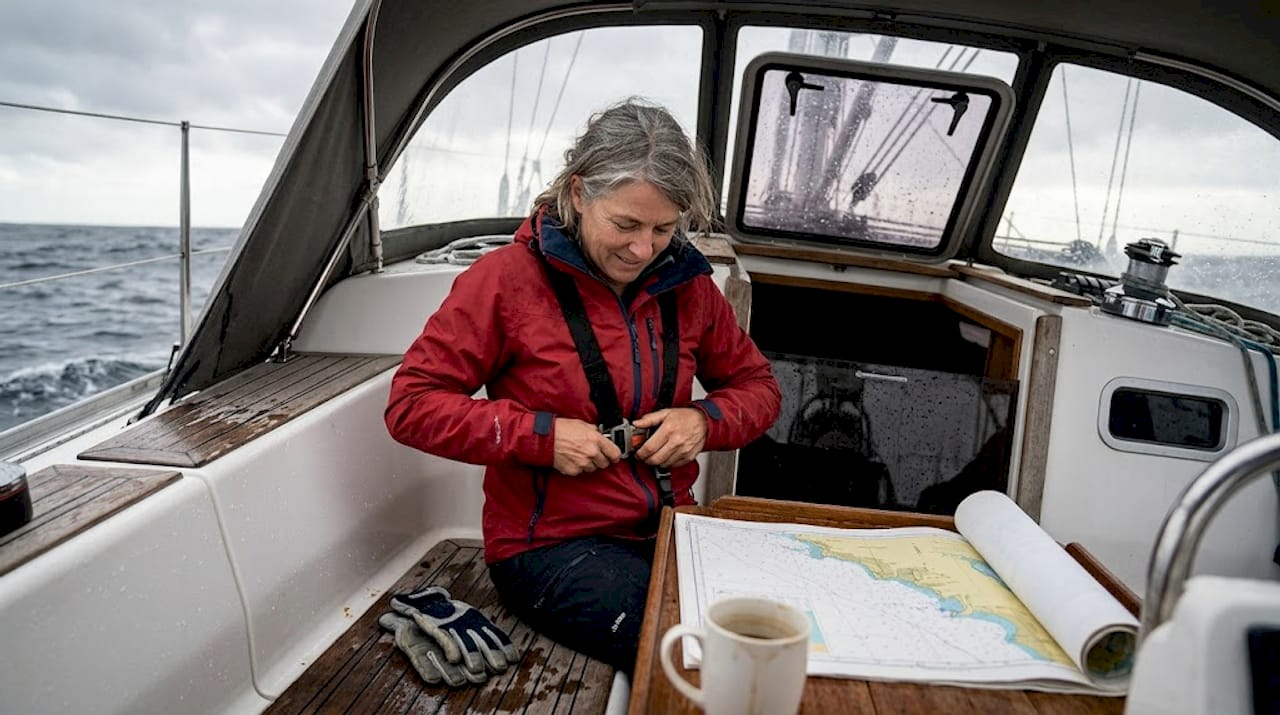
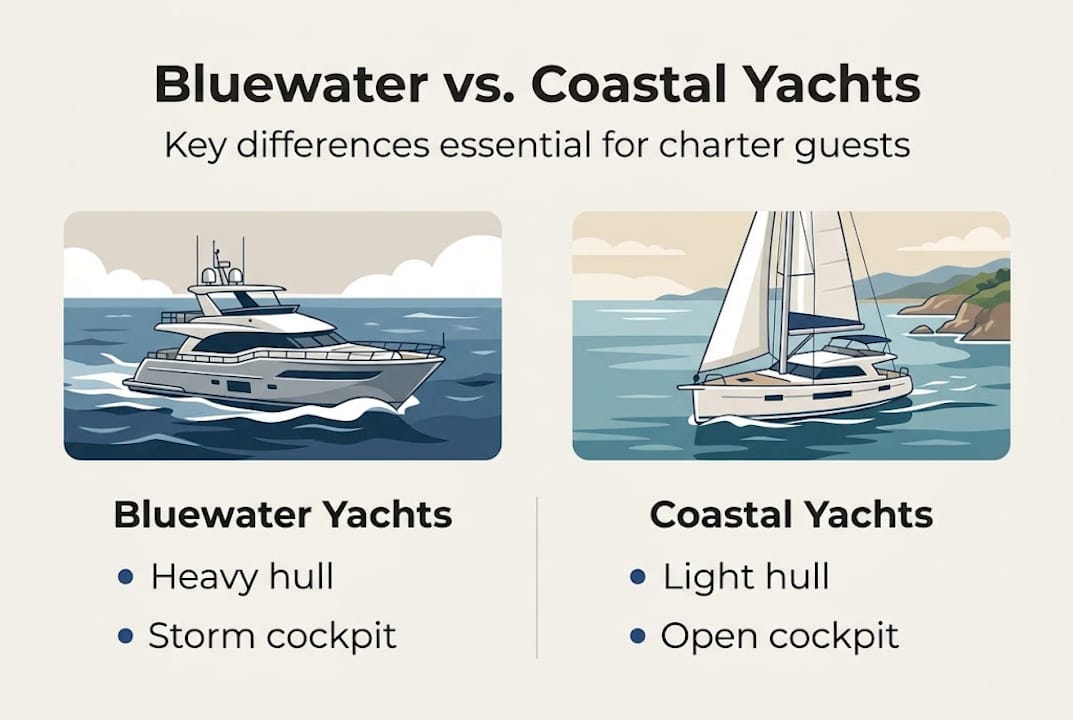
Bluewater yachts prioritize heavy weather stability, storm-proof cockpits, sea berths, and redundancy, while coastal yachts focus more on speed and marina comfort. That’s not a knock on coastal yachts. They’re excellent for day trips, weekend getaways, and calm-water cruising. But they’re simply not built for the same job.
| Feature | Bluewater yacht | Coastal yacht |
|---|---|---|
| Hull strength | Heavy-duty, offshore-rated | Lighter, optimized for speed |
| Stability in rough seas | High, deep keel design | Moderate, fin keel common |
| Fuel and water capacity | Large, for extended passages | Smaller, marina-dependent |
| Safety systems | Full offshore suite | Basic coastal equipment |
| Interior comfort | Sea berths, secured storage | Open-plan, marina-style |
| Destinations accessible | Open ocean, remote islands | Coastal routes, day trips |
| Redundant systems | Yes, multiple backups | Rarely |
For Singapore-based charters, this distinction shapes your entire experience. Here’s why it matters practically:
“The difference between a bluewater yacht and a coastal yacht isn’t just engineering. It’s the difference between a vehicle built for the highway and one built for city streets. Both are cars, but you wouldn’t take the city car on a cross-country road trip.”
When browsing options, pay attention to whether a yacht is classified as a monohull motor yacht or a catamaran motor yacht, as each type has different bluewater suitability depending on the specific model and build specs.
Having compared the different types, it’s time to look closely at what sets a genuine bluewater yacht apart. There’s no single governing body that stamps a yacht “bluewater certified,” which means you need to know what to check yourself.
No universal definition exists, but true bluewater yachts excel in hull strength, stability, and self-reliant systems. Here’s how to evaluate a yacht step by step:
| Specification | Bluewater standard |
|---|---|
| AVS (Angle of Vanishing Stability) | 120 degrees or higher |
| Capsize screening ratio | Below 2.0 |
| Hull material | Fiberglass, aluminum, or steel |
| Watermaker | Required |
| Life raft rating | Offshore-rated |
| Backup autopilot | Yes |
A well-regarded example is the Hallberg-Rassy 49, which checks every one of these boxes and is widely considered a benchmark for bluewater performance. If you’re evaluating charter options like the Island B Yacht, comparing specs against this standard is a smart move.
Pro Tip: Ask your charter broker for the yacht’s stability data and safety equipment manifest before booking. Any reputable operator will have this information ready. If they hesitate, that tells you something important.
Once you know what to look for, it’s helpful to see which models are the most trusted in ocean chartering. The good news is that the top bluewater yacht brands have invested heavily in making these vessels genuinely luxurious, not just seaworthy.
Oyster 565/575/885, Hallberg-Rassy 49/57, Hylas H57, and Boréal 47.2 are considered gold standard bluewater yachts for ocean capability blended with luxury. Here’s a closer look at what makes these models stand out for charter groups:
For families and groups in Singapore, these models offer something that standard charter yachts simply can’t: the freedom to go further. Whether you’re planning a multi-day island-hopping trip with friends or a special occasion cruise, the range and reliability of a flagship bluewater model changes what’s possible.
If you’re organizing a larger group, you’ll want to look at charter options for 10 guests or explore yachts for large groups to find the right fit. For mid-size gatherings, yachts for 22 guests offer a great balance of space and intimacy on the water.
All the technical details aside, there’s a bigger lesson we’ve seen play out with Singapore charter guests time and again. Most people don’t think about bluewater status until the sea reminds them it matters.
We’ve spoken with guests who booked a beautiful-looking yacht for an offshore trip, only to find out mid-charter that the vessel wasn’t rated for the conditions they encountered. No storm sails. No backup autopilot. A hull that flexed in ways that made everyone nervous. That’s not a fun story to tell.
The term “bluewater” isn’t marketing language. It’s a shorthand for a set of engineering decisions that directly affect your safety and enjoyment. True bluewater yachts excel where safety and reliability are paramount, and that’s the standard we hold every vessel in our fleet to.
We always recommend verifying specs before any charter adventure, especially for corporate yacht events where the stakes around guest safety and experience are even higher. A label is just a label. The specs are what protect you.
Now that you understand what a bluewater yacht truly is, the next step is finding the right one for your group. Whether you’re planning a family getaway, a celebration with friends, or a corporate outing on the water, we’ve got options that match your needs and your ambitions.
You can rent a bluewater yacht directly through our platform, with full specs and safety details available for every vessel. Planning something bigger? Check out options to book for 22 guests and find a yacht that fits your whole crew. If you’re thinking longer term, we also offer resources to help you explore yacht investment as a next step. We’re here to make the process easy, exciting, and completely tailored to what you’re looking for.
A true bluewater yacht is engineered for reliability, seaworthiness, and self-sufficiency for extended ocean passages far from shore, including features like high AVS ratings, redundant systems, and offshore-rated safety equipment.
Absolutely. Bluewater yachts prioritize seaworthiness and comfort for extended voyages, making them an excellent choice for families who want to explore beyond Singapore’s immediate coastal waters with confidence.
No. Only bluewater yachts are purpose-built for open-sea crossings. Coastal yachts are designed for near-shore cruising and lack the structural and safety systems needed for true offshore passages.
Oyster, Hallberg-Rassy, Hylas, and Boréal models are consistently the top choices for bluewater charters, combining ocean-grade safety with genuinely luxurious onboard living.