How to rent a yacht in Singapore: step-by-step guide
Learn how to rent a yacht in Singapore with this step-by-step guide covering yacht types, booking tips, costs, and what to expect on charter day.
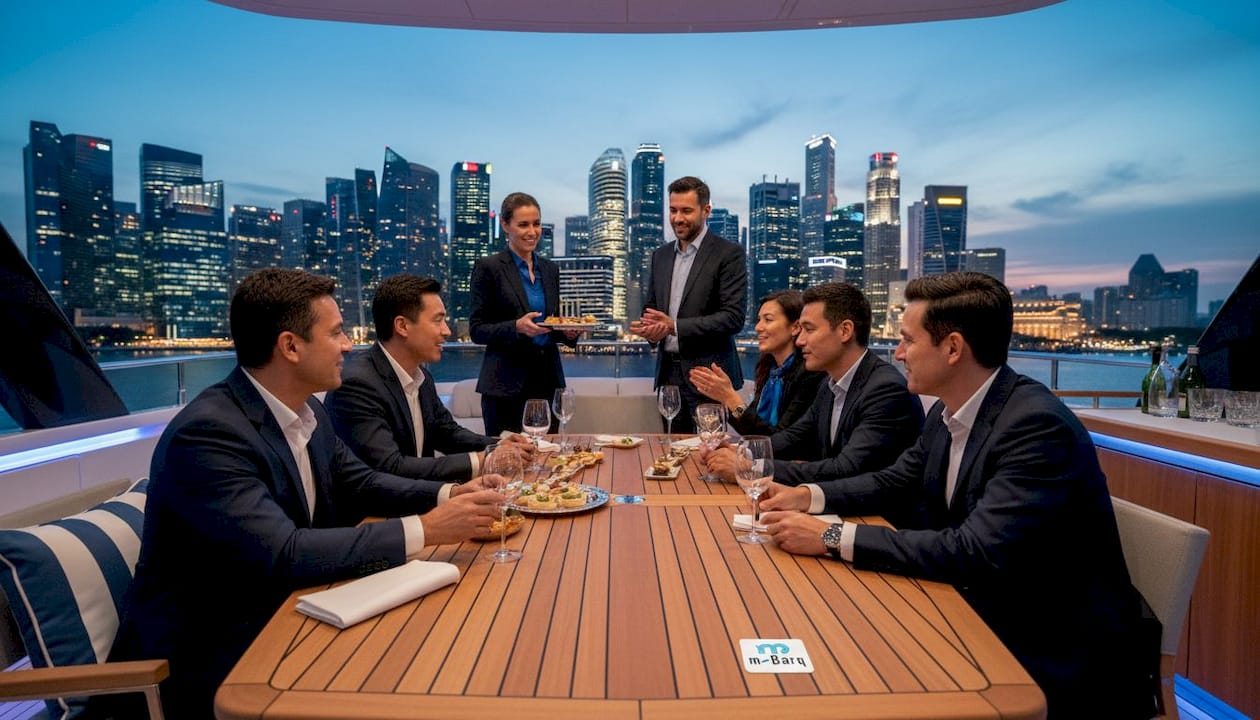
Planning a corporate event on the water sounds exciting until you realize not all yachts deliver the same experience. Many event planners book “just any yacht” and end up with cramped spaces, unpredictable schedules, or a noisy engine drowning out a key speech. Motor yachts are a specific class of vessel, and understanding what they offer puts you miles ahead when organizing team-building trips, client celebrations, or executive retreats on Singapore’s stunning waters. This guide walks you through everything you need to know, from how motor yachts work to how to choose the right one for your next event.
| Point | Details |
|---|---|
| Motor yacht definition | Motor yachts are powered vessels optimized for luxury, reliability, and spacious event hosting unlike sailing yachts. |
| Propulsion options matter | Choosing hybrid or diesel-electric yachts can enhance guest comfort through quieter operations. |
| Event-tailored layouts | Motor yachts in Singapore offer indoor/outdoor areas, AV setups, and stable performance for corporate gatherings. |
| Smart selection | Align yacht features—like maneuverability and amenities—with your group’s needs for the best event outcome. |
| Ask about technology | Asking about propulsion and touring the vessel before booking ensures your event experience meets expectations. |
Let’s clear something up first. A motor yacht is not simply any large boat with a cabin. It is a purpose-built, engine-powered vessel designed for comfort, speed, and extended time on the water. That distinction matters enormously when you’re hosting 20 executives or celebrating a company milestone.
The basics of what makes it a motor yacht:
The visual difference between a motor yacht and a sailing yacht is immediately obvious. Sailing yachts have tall masts and rely on wind. Motor yachts sit lower, look more modern, and prioritize space over performance sailing. Catamarans sit in their own category, offering a twin-hull design that is stable but often less visually impressive for formal corporate settings.
For a sense of what top-tier motor yachts look like in practice, the MS Eternity 2 motor yacht and the MS Eternity 1 yacht are excellent examples of what’s available in Singapore, complete with spacious decks and corporate-ready interiors. The Vision motor yacht is another strong option for mid-size corporate groups looking for a polished, event-friendly layout.
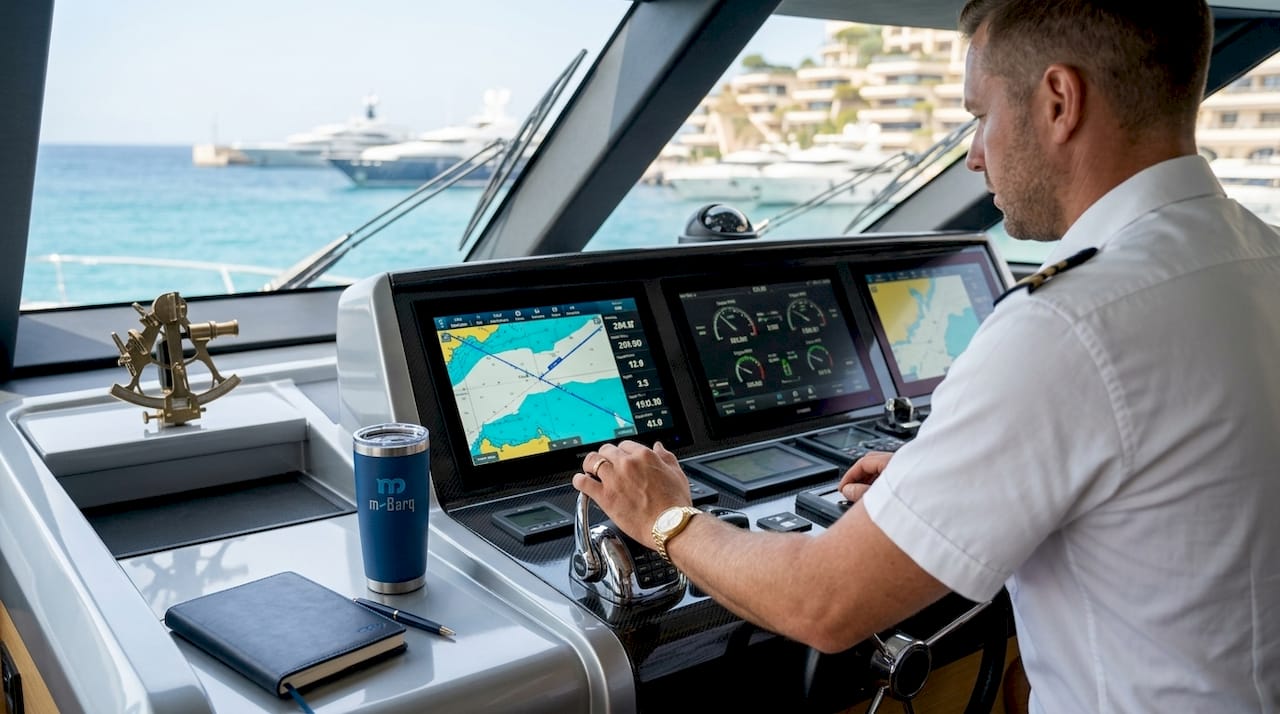
Motor yachts rely on engine-driven propulsion rather than wind. Superyacht propulsion systems include conventional diesel shaft drives, diesel-electric systems, hybrid configurations, and azimuth or pod drives, each offering different advantages in terms of efficiency, noise levels, and maneuverability.
With a foundation in what defines a motor yacht, let’s explore what actually powers these vessels and how those engineering details shape the event experience onboard.
This is the part most event planners skip entirely, and it’s a mistake. The propulsion system on a motor yacht directly affects how noisy the vessel is, how smoothly it moves, and whether your guests feel comfortable during key event moments like speeches, live music, or a formal lunch.
Here is a quick breakdown of the main propulsion types you may encounter:
| Propulsion type | How it works | Event benefit |
|---|---|---|
| Diesel shaft drive | Traditional diesel engine connected to a propeller shaft | Reliable and powerful; common on mid-range yachts |
| Diesel-electric | Diesel generator powers electric motors | Quieter operation, smoother power delivery |
| Hybrid | Combines diesel and electric power | Flexibility to switch modes; ideal for quiet anchoring |
| Azimuth/pod drives | Rotating propulsion units below the hull | Excellent maneuverability; minimal vibration |
Propulsion type impacts comfort and experience on the water significantly. Diesel-electric and hybrid systems are particularly valued for quieter cruising and more flexible operating modes compared with pure diesel engines. For corporate events, that quietness is not a luxury. It is a necessity.
Imagine hosting a product launch with a live presenter on deck. A diesel engine running at full throttle creates background noise that no sound system can fully overcome. A hybrid or diesel-electric vessel anchored at Lazarus Island or St. John’s Island, with the engine idled down, creates a calm, focused environment where your guests hear every word.
Pro Tip: When shortlisting yachts, ask the broker directly whether the vessel can operate in electric-only or low-engine mode while anchored. This is the single easiest way to protect the quality of your on-deck presentations or team activities.
When comparing motor yachts and catamarans, propulsion is one of the key differentiators. Catamarans are generally stable but may have limited interior luxury and different engine configurations. Motor yachts, especially those with modern hybrid drives, offer a more refined experience for corporate clients who expect both comfort and control.
Understanding propulsion is only the beginning. Here’s how those design choices make motor yachts the ultimate setting for corporate occasions.
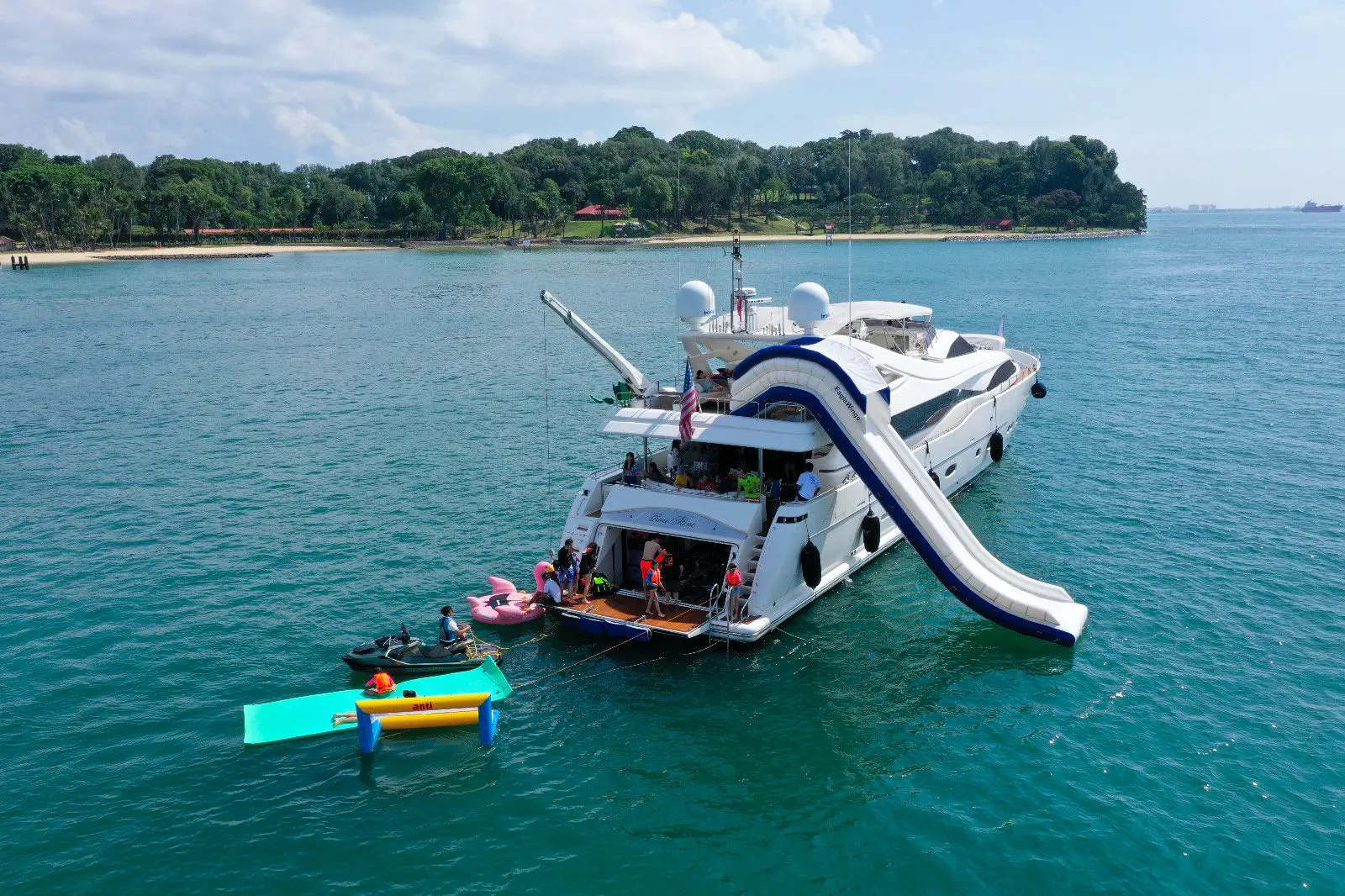
The real magic of a motor yacht for corporate use is the layout. Unlike a beach venue or a hotel ballroom, a motor yacht gives you multiple distinct zones that serve different purposes simultaneously. Your leadership team can hold a quiet debrief on the upper deck while the broader team enjoys drinks and kayaking off the stern at Lazarus Island.
Key spaces that make corporate events work on a motor yacht:
The stability of a motor yacht, driven by engine power and weight distribution, means presentations do not get derailed by sudden rocking. This matters when you have a projector running or a senior leader addressing the team. Sailing yachts depend on wind and can heel (tilt), which is uncomfortable for guests not used to the water.
Here’s a quick look at common layout features that corporate event planners care about most:
| Feature | Why it matters for events |
|---|---|
| Air-conditioned saloon | Keeps guests comfortable in Singapore’s heat |
| Sound system | Essential for music, speeches, or background ambiance |
| Bar area | Efficient for catering service and social flow |
| Multiple deck levels | Separates activities without crowding |
| Swim platform/stern access | Enables water activities when anchored |
| Seating capacity | Determines how many guests can be comfortable |
Outdoor dining on yachts is one of the most popular elements of corporate charters in Singapore. A BBQ setup on the stern deck while anchored near St. John’s Island creates a relaxed, memorable atmosphere that hotel venues simply cannot replicate. Guests eat, socialize, and enjoy the scenery, all at the same time. For a full picture of what corporate yacht event options look like in practice, it helps to browse real event packages and see how the layout translates into a full-day program.
The luxury yacht amenities available on modern motor yachts also give event planners creative flexibility. You can match the experience to your brand: sleek and formal for a client appreciation dinner, or energetic and fun for a team-building day with water sports.
Modern superyacht propulsion systems, including diesel-electric and azimuth drives, make it easier for captains to position the vessel precisely at anchor, ensuring the swim platform stays accessible and guests can enjoy water activities without the yacht drifting.
Now that the advantages of motor yachts are clear, here’s how to select the perfect vessel for your next event.
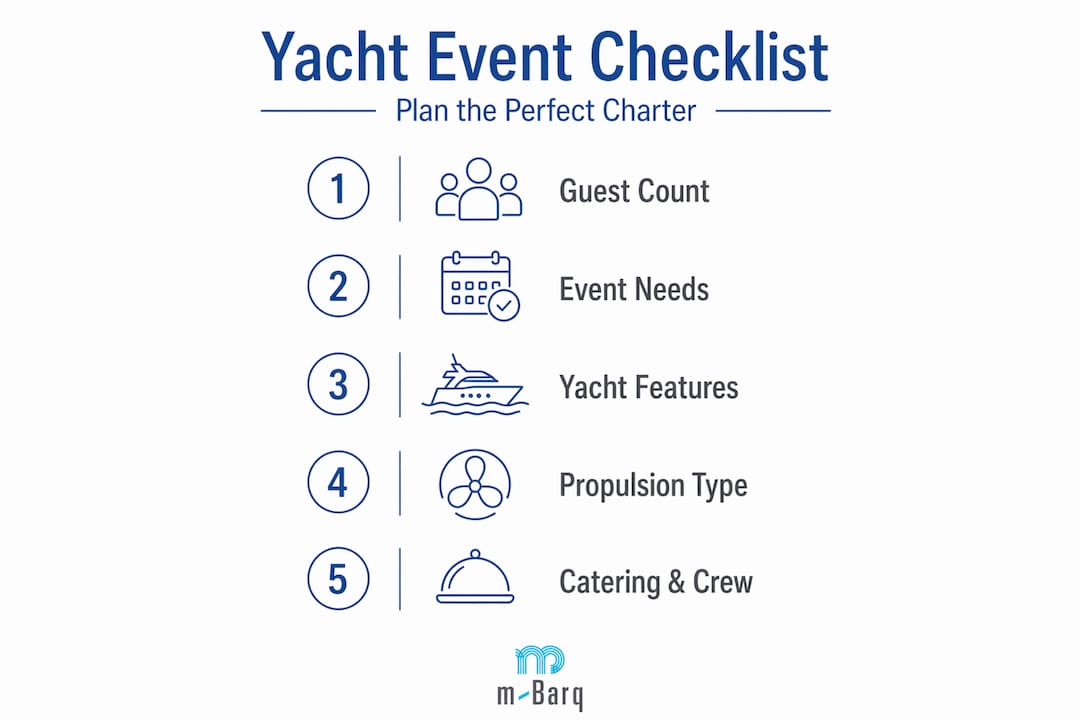
Picking the right yacht is not just about size. It’s about matching the vessel’s character to your event’s goals. A 60-person team-building day has very different needs from an intimate 15-person client appreciation cruise. Here’s a practical checklist to guide your decision:
When browsing the full range of motor yachts available for charter in Singapore, pay attention to the vessel specifications, photos of the deck layout, and any included services. These details reveal a lot about how the yacht will perform as an event venue.
Pro Tip: For itineraries that include multiple anchor points or a cruise past the Southern Islands before settling at Lazarus Island, prioritize yachts with azimuth or pod drives. These systems allow the captain to reposition the vessel quickly and smoothly, which keeps your timeline on track without interrupting the on-deck atmosphere. Choosing the right broker to guide this decision ensures you get honest advice matched to your specific event needs.
After all these practical details, it’s time for an insider perspective on what most event planners overlook but shouldn’t.
Here is an uncomfortable truth: most corporate event planners spend 80% of their budget decisions on catering, decor, and activities, while propulsion and vessel mechanics barely get a question in the RFP. We understand why. Engines seem like the crew’s problem, not yours. But from experience working with corporate groups on Singapore’s waters, propulsion is the single most overlooked factor that can silently ruin an otherwise flawless event.
Think about it this way. You’ve arranged a gorgeous sunset dinner at anchor near Lazarus Island. The catering is exceptional, the decor is on-brand, and your CEO is about to address the team. Then the captain needs to run the main engine to maintain generator power, and suddenly there’s a low, persistent rumble underneath every word. Guests start leaning in, straining to hear. The moment deflates.
This is not a hypothetical. It happens regularly on older vessels with purely diesel systems and no electric idle mode. The fix is simple but only if you ask the right question beforehand.
Diesel-electric and hybrid systems are associated with quieter cruising and more flexible operating modes, meaning they can maintain onboard power with far less noise when the vessel is stationary. Asking “Can this yacht run quietly at anchor?” is one of the most valuable questions you can include in any vendor inquiry.
There’s a broader point here too. Propulsion affects timing, not just noise. A vessel with azimuth drives can maneuver to a precise anchor spot much faster than one with a traditional shaft drive, which directly protects your event timeline. When you’re coordinating a full-day schedule with water sports, a meal service, and a sunset toast, every minute of unnecessary repositioning costs you atmosphere and momentum.
Our advice? Include a propulsion question in your initial RFP. Ask for the vessel’s noise profile at anchor. And if possible, request a brief walkthrough or sea trial before your event date to confirm the environment matches your expectations. The best yacht event case studies show that the most successful corporate charters are the ones where the planner treated the vessel as a venue, not just a boat.
You now have a clear picture of what motor yachts are, how they work, and what to look for when planning a corporate experience on the water in Singapore. The next step is finding the right vessel and the right team to bring your vision to life.
At m-Barq, we specialize in exactly this. From renting a motor yacht in Singapore for a seamless client celebration to organizing full-day corporate yacht events with water sports, catering, and crew, we handle every detail so your guests simply show up and enjoy. Our team-building activities on a yacht include kayaking, stand-up paddleboarding, water slides, and large water mats, all managed by an experienced crew at Singapore’s most scenic island anchorages. Reach out today to explore your options and get a tailored quote for your next event.
Motor yachts use engines for consistent speed and stability, making them far more predictable for scheduled corporate events. Sailing yachts depend on wind conditions, which can affect timing and comfort for guests not experienced on the water.
Most event-configured motor yachts in Singapore comfortably host between 12 and 55 guests, depending on the vessel’s size and interior layout. Larger charter options can accommodate up to 40 guests for standing cocktail-style events.
Good maneuverability, often provided by azimuth or pod drives, lets the captain reposition the yacht efficiently at anchor points like Lazarus Island or St. John’s Island, keeping your schedule tight and your event flowing smoothly even if conditions change.
No special license is required from you or your guests. Every charter includes a licensed captain and a professional crew, so your team focuses entirely on enjoying the experience while the professionals handle all navigation and vessel management.